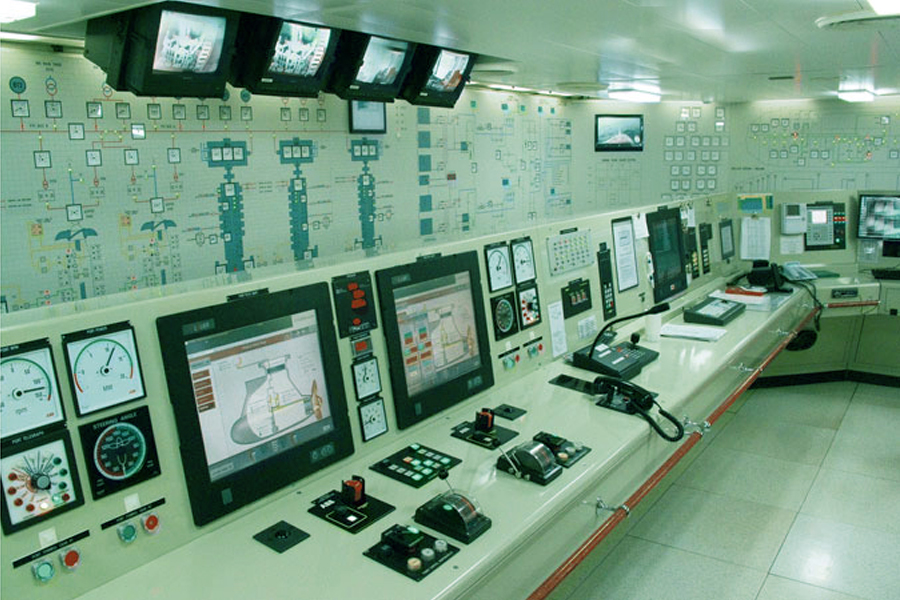
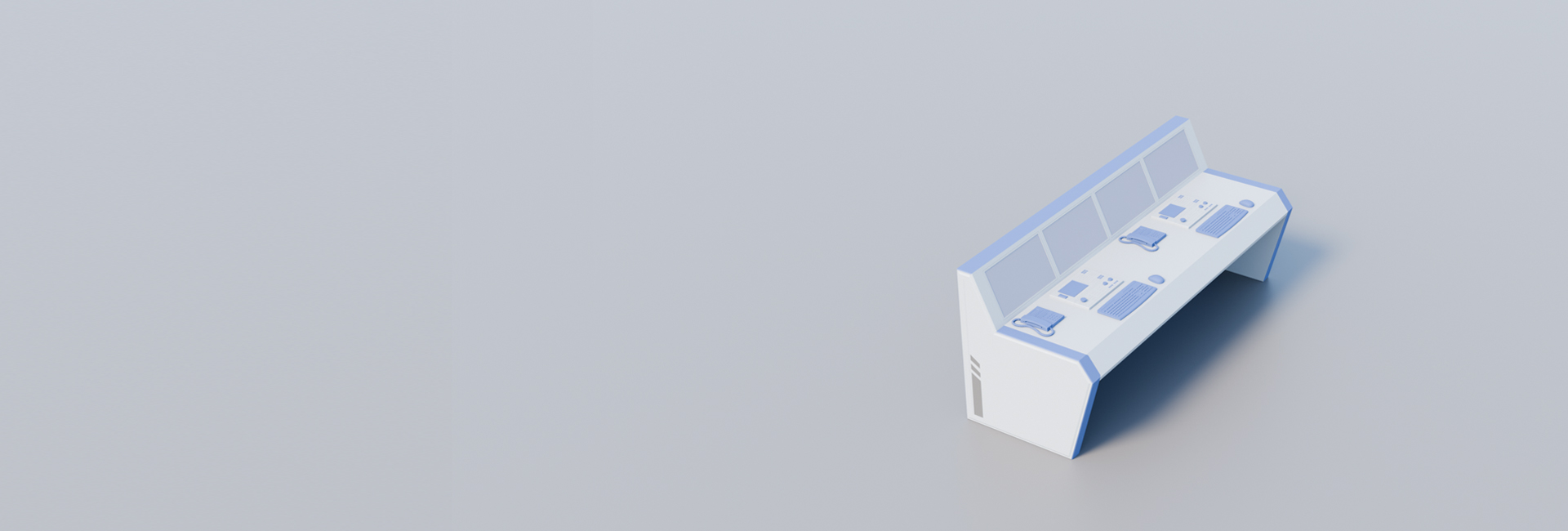
The engine room monitoring console is the "nerve center" that controls the real-time operation status of core equipment in the engine room and ensures the safety and stability of the ship's power system. Its design requires deep integration of data acquisition, visual monitoring, warning intervention, and remote interaction functions.
From the perspective of hardware architecture, monitoring consoles are usually equipped with multi connected high-definition display terminals (including main monitoring screens, subsystem close-up screens, and alarm pop-up screens), redundant operation panels (including physical buttons and touch interaction areas), and emergency control units. The core hardware needs to have the characteristics of resistance to ship bumps, electromagnetic interference, and salt spray corrosion, and be suitable for harsh working environments in engine rooms.
From the perspective of software functionality, its core relies on the ship energy management system (EMS) and equipment monitoring system (SCADA), which can collect and dynamically display three types of key data in real time:
At the same time, the equipment operating conditions are intuitively presented in the form of charts, curves, dynamic simulation diagrams, etc. through the configuration interface, making it easy for operators to quickly identify abnormalities.
In addition, the monitoring console also has a multi-level warning mechanism - when the parameters exceed the safety threshold, the warning will be triggered synchronously through sound and light alarms (such as buzzers, warning lights), pop-up prompts, and log records, and can be linked with the BMS and distribution system to perform preliminary protection actions (such as limiting charging and discharging power, cutting off non critical circuits); Some high-end monitoring consoles also support remote operation and maintenance functions, which can upload operational data to the shore based monitoring center through encrypted networks to achieve remote fault diagnosis and technical support, providing key guarantees for the efficient operation and safe navigation of all electric ships.