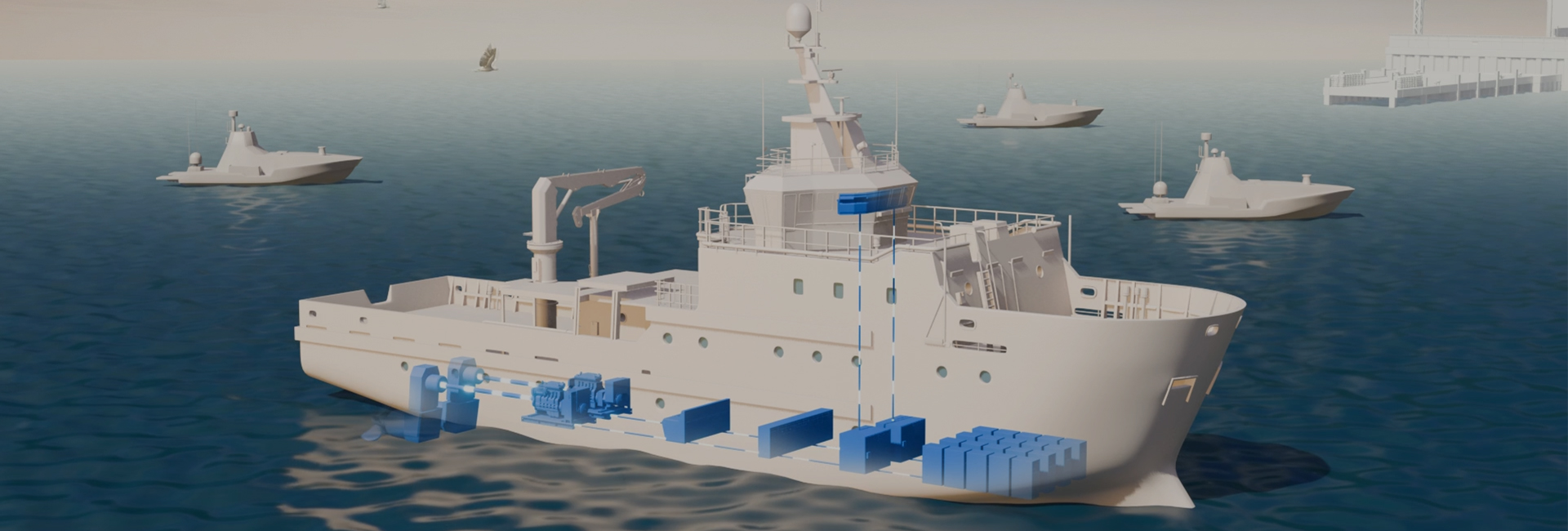














The Lithium Battery All-Electric Propulsion System leverages high-capacity lithium battery technology to power ships with a clean, efficient, and environmentally friendly electric drive.
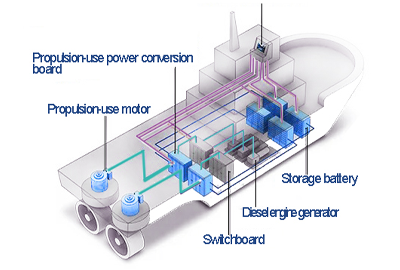
- Energy Storage: Large-capacity lithium battery packs serve as the primary power source, offering high energy density alongside rapid charging and discharging capabilities.
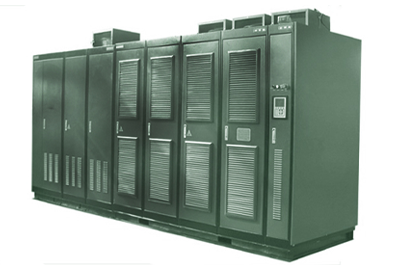
- Power Conversion and Distribution: Electrical energy from lithium batteries (DC) is converted into AC via inverters and converters, enabling precise power distribution to propulsion motors and onboard equipment.
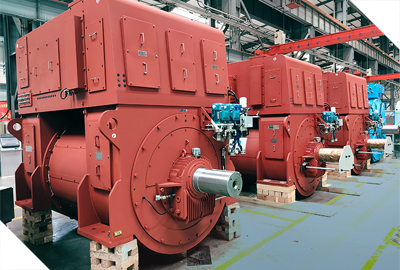
- Propulsion Drive: Electric propulsion motors directly drive the ship’s propellers, replacing traditional combustion engines. The system provides fine motor speed control to optimize vessel speed and maneuverability, while significantly reducing noise and emissions.
- Increased Labor Efficiency: The electrification of ship control systems enhances compatibility with IoT devices (sensors and communication devices). This helps address labor shortages by enabling increased labor efficiency through automated operations.
- Low Noise and Vibration: The engine has been replaced with a low-noise, low-vibration motor, which provides a less stressful and more comfortable onboard environment for the crew and passengers. The electrification of ship control systems enhances compatibility with IoT devices (sensors and communication devices). This helps address labor shortages by enabling increased labor efficiency through automated operations.
- Space-Saving Design With Less Air Conditioning Equipment: The water-cooling system improves cooling efficiency compared to air-cooling systems, contributing to reduced size and space savings. Since the main exhaust heat from the equipment is cooled using water, the amount of onboard air conditioning equipment can be reduced.
- Zero-Emission Ships: We are helping zero-emission vessels become more widespread in both domestic and international shipping, thereby contributing to efforts to achieve carbon neutrality in international maritime transport by 2050, as well as the goals outlined in plans to combat climate change.
Key components and functions include:
This all-electric propulsion system represents a significant advancement toward sustainable maritime operations, combining energy efficiency with environmental stewardship.