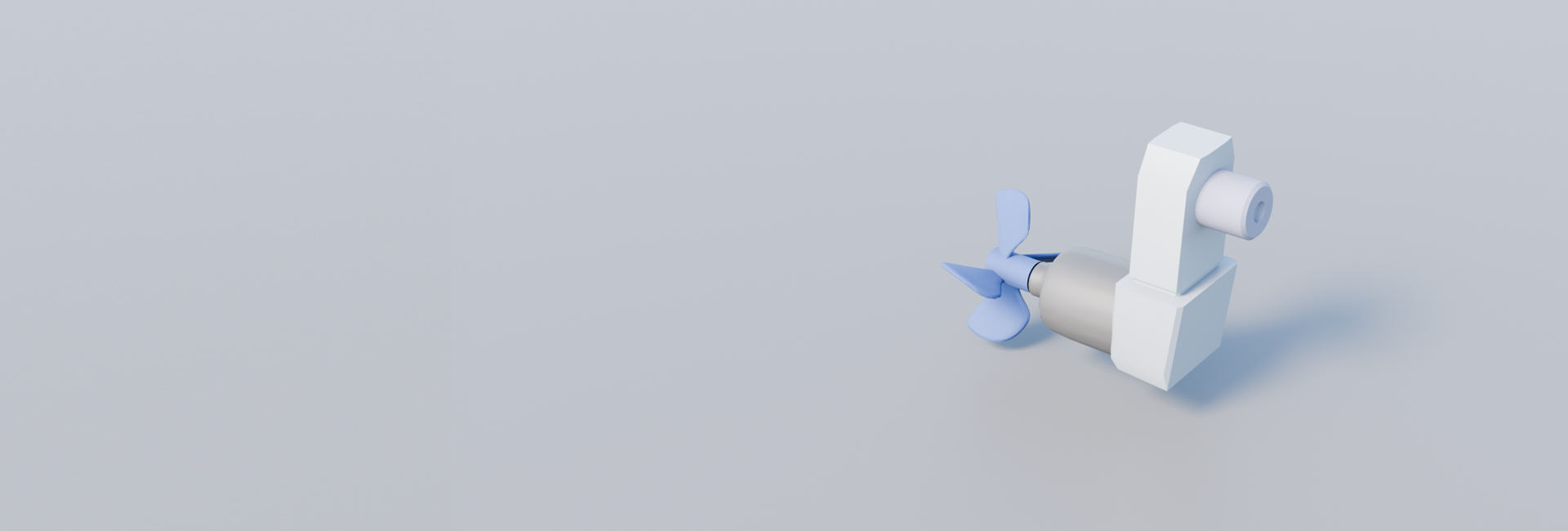
The fully rotating rudder propeller (also known as the "Z-type propeller" or "pod type fully rotating propeller") is the core device that integrates propulsion power and heading control functions. It highly integrates the propulsion motor, reduction gear, propeller, and steering mechanism, breaking the traditional separation design of "propeller+servo" and providing more flexible, efficient, and precise maneuverability for ships, especially suitable for all electric ship scenarios such as tugboats, ferries, and engineering ships that require high maneuverability.
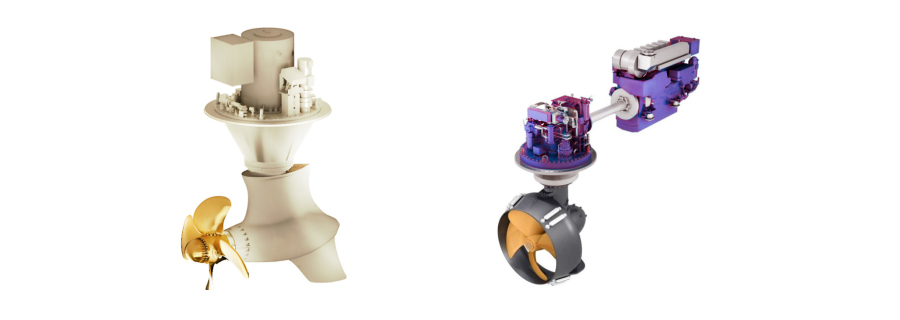
From the perspective of structural characteristics, the fully rotating rudder propeller is mainly divided into three core parts: the "upper box", "slewing support", and "lower pod".
- The upper box is responsible for fixing the ship's engine room base, with a built-in power input shaft and hydraulic/electric slewing drive mechanism;
- The slewing support achieves 360 ° continuous rotation of the lower pod through high-precision bearings and gear structures (some models can reach a rotation speed of 5 ° -10 °/s), without relying on traditional servo deflection to adjust the thrust direction;
- The lower pod integrates a propulsion motor (or motor output shaft and reduction mechanism), propeller, and diffuser. The propeller often adopts an adjustable pitch design, which can further optimize the thrust size by changing the blade angle and adapt to different working conditions such as "forward reverse lateral movement" of the ship.
For pure electric ships, the propulsion motor (usually a permanent magnet synchronous motor) in the lower pod is directly powered by a lithium battery system through an inverter, with a short transmission link (no long shaft transmission loss) and an energy conversion efficiency 8% -15% higher than traditional shaft propulsion.
It is the core equipment that maintains the stable, efficient, and safe operation of the entire ship's DC power system.
From the perspective of performance advantages, the core value of a fully rotating rudder propeller lies in maneuverability and power responsiveness :
- Firstly, the 360 ° omnidirectional thrust can be controlled, allowing the ship to achieve "crab like" actions such as turning in place, lateral translation, and oblique navigation. In narrow channels, port berthing and departure scenarios, precise positioning can be achieved without frequent adjustments to the ship's attitude, greatly reducing operational difficulty;
- Secondly, the thrust direction is synchronized with the steering action, with a response time of only 0.3-1 seconds from the issuance of control commands to the adjustment of thrust direction, much faster than traditional servos (usually 2-3 seconds), which can quickly respond to sudden changes in water flow and wind direction, improving navigation safety;
- Thirdly, there is strong power redundancy, and some fully electric ships will adopt a dual full turn rudder propeller configuration. In the event of a single propeller failure, basic control can still be maintained through the differentiated thrust of the other propeller, ensuring navigation reliability.
From the perspective of adaptability design, the fully rotating rudder propeller needs to be specially optimized for the characteristics of pure electric ships.
- On the one hand, the motor and electrical components inside the pod need to be strengthened in sealing and anti-corrosion treatment (such as using IP68 waterproof and salt spray resistant coatings) to avoid short circuits caused by seawater intrusion. At the same time, an independent cooling system (such as seawater cooling jacket) should be equipped to balance the operating heat of the motor and adapt to the underwater working environment of the ship;
- On the other hand, its rotary drive and propeller control need to be deeply coordinated with the ship's energy management system (EMS) and propulsion motor controller - when the SOC of the lithium battery is low, the EMS can link with the rudder propeller system to limit the maximum thrust output and prioritize ensuring endurance; When overload of the propulsion motor is detected, the rudder propeller will automatically adjust the propeller angle to reduce the load and avoid the risk of overcurrent in the lithium battery system.
In addition, some high-end fully rotating rudder propellers also integrate torque monitoring and vibration diagnosis functions, which can feedback operating data to the engine room monitoring console, achieve status warning and early troubleshooting, and provide key support for the efficient and safe operation of pure electric ships.